
Table of Contents
ToggleDibella isn’t just another Divine in Skyrim’s crowded pantheon, she’s the key to one of the game’s most underrated combat buffs. Most players stumble into the Temple of Dibella in Markarth, grab the quest, and move on without realizing they’re leaving behind a permanent 10% damage boost against the opposite sex. That’s a significant edge, especially for melee builds facing humanoid enemies throughout the game.
This guide breaks down everything about Dibella: her lore, the Temple of Dibella questline, the Agent of Dibella blessing, shrine locations, and what happens if you decide to keep that golden statue for yourself. Whether you’re optimizing a character build or just curious about Skyrim’s ninth Divine, you’ll find exactly what you need here.
Key Takeaways
- Dibella Skyrim offers a permanent 10% melee damage bonus against opposite-sex humanoid enemies through the Agent of Dibella blessing, making it one of the game’s most underrated combat buffs.
- The Heart of Dibella quest in Markarth requires rescuing Fjotra from the Forsworn and returning her to the temple to unlock the powerful Agent blessing.
- The Agent of Dibella blessing stacks multiplicatively with enchantments and perks, making it especially valuable for two-handed warriors and dual-wield builds.
- Selling the Statue of Dibella to Degaine for 750 gold permanently locks you out of the quest and blessing, so returning it to the priestesses is the optimal choice.
- Dibella’s temporary shrine blessings provide 10% easier speech checks for 8 hours and work separately from the permanent Agent blessing, allowing you to stack both effects.
Who Is Dibella in Skyrim?
The Lore and Mythology of Dibella
Dibella is the Divine of Beauty, Art, and Affection in the Elder Scrolls universe. She’s worshipped across Tamriel, but her following in Skyrim tends toward the secretive. Her priestesses maintain strict traditions, including the selection of young girls as Sybils, spiritual conduits for Dibella’s will.
Unlike Akatosh or Talos, Dibella doesn’t get much screen time in Skyrim’s main narrative. Her worship focuses on inner beauty, the arts, and, according to some texts, erotic instruction. The Lusty Argonian Maid might be fiction, but Dibella’s temples have historically taught more than hymns. In Skyrim, though, her priestesses keep things relatively tame, focusing on protecting the Sybil and maintaining their sacred rituals.
Dibella’s Role in Tamriel’s Pantheon
Dibella is one of the Nine Divines (or Eight, depending on who you ask post-Great War). She’s generally portrayed as benevolent, contrasting sharply with Daedric Princes like Molag Bal or Boethiah. Her sphere overlaps slightly with Mara’s, both concern themselves with love and relationships, but Dibella leans toward passion and artistic expression while Mara handles marriage and family.
In terms of gameplay impact, Dibella sits comfortably in the mid-tier of Divine worship. Her blessing isn’t flashy like Talos’s shout cooldown reduction, but it’s practical and effective for specific builds. Most players encounter her through the Markarth questline rather than seeking her out deliberately.
The Temple of Dibella in Markarth
Finding and Entering the Temple
The Temple of Dibella sits in the upper level of Markarth, accessible via the stone ramps that wind through the city. You can’t miss it, it’s the building with priestesses who immediately tell you to leave if you try entering during daylight hours. The temple’s inner sanctum is off-limits to outsiders, particularly men, which sets up the entire questline.
You have two ways in: pick the novice-level lock on the inner sanctum door (easy for anyone with a lockpick or two), or wait until night when the priestesses sleep. Sneaking works, but most players just pick the lock and deal with the consequences. The priestesses will catch you almost immediately after you enter, triggering dialogue that kicks off The Heart of Dibella quest.
The Sybil of Dibella and Her Priestesses
The temple houses several priestesses, including Senna (who you might meet during A Night to Remember) and Hamal, the high priestess. They’re searching for the next Sybil of Dibella, a young girl chosen through visions to serve as the goddess’s mortal vessel.
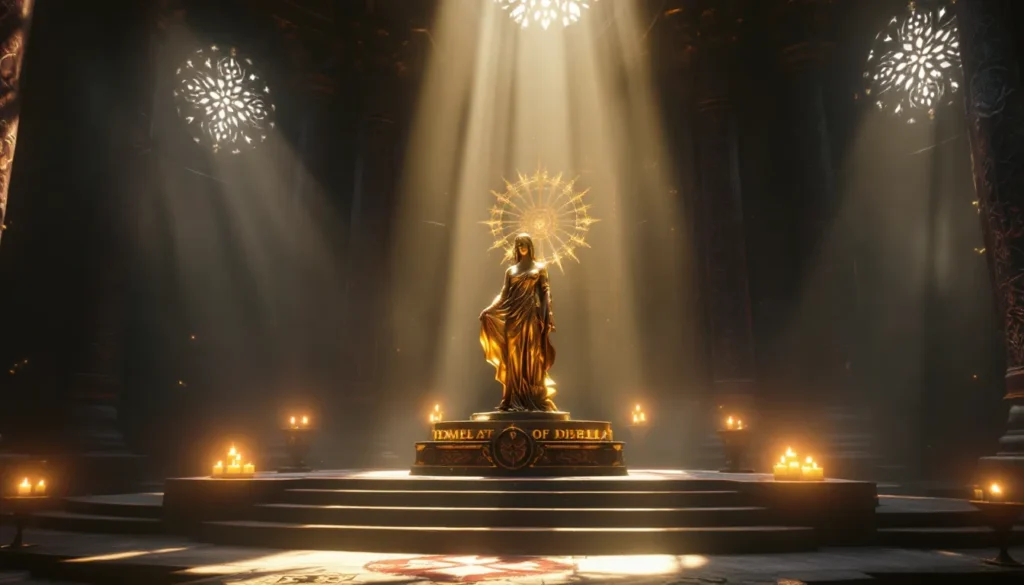
The current Sybil candidate is Fjotra, a girl from Karthwasten who’s been kidnapped by the Forsworn. The priestesses are understandably frantic about this, which explains why they’re willing to overlook your break-in if you agree to help. Hamal will offer you the quest formally once the confrontation plays out, though you can also start things by stealing the Statue of Dibella from the inner sanctum before talking to anyone.
The Heart of Dibella Quest Walkthrough
Starting the Quest: Stealing the Statue
There are two quest triggers. First: talk to Degaine outside the Temple of Dibella. He’s a beggar who’ll offer you a gold reward if you steal the Statue of Dibella for him. This starts the quest formally, though it’s technically a miscellaneous objective until you grab the statue.
Second: just break into the inner sanctum and take the statue yourself. Either way, once you have the statue, the priestesses will confront you. You can return it immediately and accept their quest, or walk away with it (more on that later). Returning the statue is the path to the Agent of Dibella blessing, so most players choose cooperation over petty theft.
Finding Fjotra in the Forsworn Camp
Once you agree to help, Hamal directs you to Karthwasten, a small mining settlement southwest of Markarth. Talk to Enmon or Mena, Fjotra’s parents, and they’ll tell you she was taken to Broken Tower Redoubt. This is a Forsworn-occupied fort northwest of Markarth, perched on a hillside with multiple levels.
The dungeon is straightforward but packed with Forsworn enemies, mostly melee fighters with a few archers. There’s a Forsworn Briarheart at the top level guarding Fjotra, and he’s tough if you’re under-leveled. Briarhearts have high health pools and hit hard, so bring potions or followers. When exploring character builds in role-playing games, having effective crowd control abilities can trivialize encounters like this one.
Fjotra is locked in a cage on the upper platform. Free her (no key needed, the cage just opens), and she’ll follow you. Fast-travel back to Markarth or walk her there, either works. She’s flagged as essential, so she can’t die.
Quest Rewards and Consequences
Return to the Temple of Dibella with Fjotra, and Hamal will thank you. Speak with her again, and she’ll grant you the Agent of Dibella blessing. This is a permanent effect, it doesn’t wear off like shrine blessings do. You also get a leveled gold reward (usually 200-500 septims depending on your level).
There’s no reputation hit for completing this quest the “right” way. The Forsworn were already hostile, and the Temple priestesses become friendly afterward. You can still use the shrine in the temple for standard Dibella blessings if you lose your Agent status somehow (though that’s rare outside of becoming a vampire or werewolf).
Agent of Dibella: Blessing Effects and Benefits
How the Blessing Works in Combat
The Agent of Dibella blessing provides a flat +10% melee damage bonus against opponents of the opposite sex. That means male characters deal 10% more damage to female NPCs, and female characters deal 10% more to male NPCs. It stacks multiplicatively with perks and enchantments, making it a solid DPS increase for weapon-focused builds.
The catch: it only works on gendered NPCs. Draugr, dragons, dwemer automatons, animals, and Daedra don’t have genders (or they’re coded as neutral), so the blessing does nothing against them. But for humanoid enemies, bandits, Forsworn, Thalmor, vampires, enemy soldiers, you’ll see the bonus consistently.
In practical terms, this turns a 100-damage power attack into 110 damage. Not game-breaking, but meaningful over the course of a playthrough. It’s especially valuable in Civil War questlines or faction conflicts where you’re fighting mostly human enemies.
Best Character Builds for Dibella’s Blessing
Two-handed warriors and dual-wielders get the most mileage from Agent of Dibella. Builds that focus on raw physical damage, especially those using Elemental Fury or Berserker Rage, scale well with percentage-based buffs.
Optimal build examples:
- Two-handed Nord warrior: Stack the blessing with Battleaxe of Fiery Souls, Elemental Fury, and Fortify Two-Handed enchantments. You’re already one-shotting most humanoids: this just guarantees it.
- Dual-wield Redguard: Combine Adrenaline Rush, Dual Flurry perks, and Dibella’s blessing for insane burst DPS against human opponents.
- One-handed + shield fighter: Less dramatic than two-handed, but the bonus still helps if you’re using Elemental Fury or focusing on attack speed.
Mages and archers get less from this blessing since it’s melee-specific. If you’re running a stealth archer or destruction mage, prioritize other Divine blessings like Talos (shout cooldown) or Julianos (magicka regen). Many players exploring advanced game mechanics and build optimization find that matching blessings to playstyle makes more difference than raw power.
Shrines of Dibella Across Skyrim
All Shrine Locations and How to Use Them
Dibella’s shrines are scattered across Skyrim, though they’re less common than shrines to Talos or Arkay. Here’s where to find them:
- Temple of Dibella, Markarth: The main temple, accessible after completing The Heart of Dibella.
- Temple of the Divines, Solitude: Contains shrines to all Nine Divines, including Dibella.
- Understone Keep, Markarth: Small shrine in the jarl’s quarters, accessible if you’re friendly with Markarth’s court.
- Haelga’s Bunkhouse, Riften: Haelga is a devoted follower of Dibella (to put it mildly). Her bunkhouse has a shrine you can use.
- Helgen Keep: In the torture chamber near the start of the game, though this area is only accessible during the tutorial or via mods.
Using a shrine grants the standard Blessing of Dibella: Speech checks are 10% easier for 8 in-game hours. It’s a temporary effect that wears off or gets replaced if you activate another Divine shrine. This is completely separate from the Agent of Dibella blessing.
Temporary Blessing vs. Agent of Dibella
The shrine blessing and the Agent blessing serve different purposes. The temporary blessing from shrines helps with bartering and persuasion, useful if you’re about to haggle with merchants or do faction quests with speech checks. It’s the same effect you’d get from wearing an Amulet of Dibella.
The Agent of Dibella blessing is combat-focused and permanent. You can have both active simultaneously: they don’t conflict. Most players grab the Agent blessing for the damage boost and ignore the shrines unless they’re specifically doing speech-heavy content.
One quirk: becoming a werewolf or vampire removes the Agent blessing temporarily. You’ll need to cure yourself and receive the blessing again from Hamal if you want it back. Shrine blessings also get removed by lycanthropy and vampirism, but those respawn every 8 hours anyway.
Alternative Paths: What Happens If You Keep the Statue?
Selling the Statue to Degaine
If you steal the Statue of Dibella and refuse to return it to the priestesses, you can sell it to Degaine for a measly 750 gold. That’s it. No special quest, no alternate storyline, just a quick payday. Degaine will take the statue and disappear from relevance.
This locks you out of The Heart of Dibella quest permanently on that character. You won’t be able to get the Agent of Dibella blessing, and the priestesses will remain hostile or disappointed. For 750 gold and a statue you can’t display in your house, it’s objectively the worse choice.
The only reason to do this is roleplay. Maybe you’re playing a character who hates the Divines, or you want to deliberately lock yourself out of certain blessings for challenge runs. Otherwise, it’s a trap option.
Impact on Faction Reputation
Stealing the statue and keeping it doesn’t tank your reputation with Markarth or its factions, but the Temple priestesses will refuse to interact with you beyond generic dialogue. You can still use other shrines of Dibella across Skyrim, but the Markarth temple shrine becomes inaccessible.
There’s no bounty for the theft unless you get caught in the act by guards. The priestesses won’t report you, they’ll just be passive-aggressive about your life choices. If you’re trying to maintain good standing with all factions for completionist purposes, returning the statue is the only clean path forward.
Tips and Strategies for Maximizing Dibella’s Benefits
Timing matters: Grab the Agent of Dibella blessing early if you’re running a melee build. The 10% damage boost scales with your character’s growth, so getting it at level 10 is better than waiting until level 40.
Gender distribution: Roughly 60% of humanoid enemies in Skyrim are male, so female characters get slightly more mileage from the blessing statistically. It’s not a huge edge, but it’s there.
Stack with other buffs: Combine the blessing with Fortify One-Handed/Two-Handed enchantments, smithing improvements, and combat perks. Percentage bonuses multiply together, so a fully optimized build can push that 10% much further in practice.
Don’t stress about shrine blessings: The temporary Dibella blessing from shrines is nice for speech checks, but if you’re juggling multiple Divine blessings for different situations, prioritize combat or utility blessings over speech. You can always wear an Amulet of Dibella for the same effect without tying up your blessing slot.
Mod considerations: If you’re using gameplay mods from popular modding communities, check whether they alter Divine blessings. Some overhauls like Wintersun or Religion completely rework how worship works, which can buff or nerf Dibella’s effects.
Alternate start mods: If you’re using Live Another Life or similar alternate start mods, you might begin the game near Markarth. Hitting the Temple of Dibella early can set you up with the blessing before level 10, which is a nice power spike for new characters.
Civil War synergy: If you’re planning to do the Civil War questline, Agent of Dibella shines. Most battles involve waves of soldiers, and the majority are humanoid enemies where the blessing applies. It’s a small edge, but those add up in multi-enemy fights.
Conclusion
Dibella’s questline is short, her blessing is situational, but for melee builds facing humanoid enemies, Agent of Dibella is one of the better permanent buffs in Skyrim. The quest itself is straightforward, rescue Fjotra, return her to the temple, collect your blessing. Don’t sell the statue to Degaine unless you enjoy making bad decisions for roleplay reasons.
If you’re optimizing a two-handed or dual-wield build, grab this blessing early. If you’re a mage or archer, it’s skippable, but there’s no downside to having it as a passive bonus. Either way, the Temple of Dibella is worth visiting at least once per playthrough, if only to see what all the secrecy is about.


